
Why What You Eat After a Workout Makes or Breaks Your Results
The best recovery food after workout choices are ones that combine protein and carbohydrates — eaten within two hours of exercise. Here’s a quick reference:
| Recovery Goal | Best Foods | Target Amount |
|---|---|---|
| Muscle repair | Greek yogurt, eggs, salmon, chicken | 20-40g protein |
| Energy replenishment | Banana, oats, sweet potato, chocolate milk | 30-45g carbs |
| Reduce inflammation | Tart cherry juice, blueberries, fatty fish | 1-2 servings |
| Rehydration | Water, electrolyte drinks, watermelon | 16-24 oz per lb lost |
You put serious effort into your workouts. But here’s the part most people miss: the workout itself doesn’t make you stronger — recovery does.
Exercise creates tiny tears in your muscle fibers. Your body rebuilds those fibers stronger during the hours and days after you train. That rebuilding process runs on what you eat.
Skip the right nutrients, and your body has nothing to build with. Eat well, and you repair faster, feel less sore, and perform better next time.
The research is clear: consuming the right mix of protein and carbohydrates after exercise significantly speeds up muscle repair and glycogen replenishment. And delaying carbohydrates by even two hours post-workout can reduce glycogen synthesis by as much as 50%.
The good news? You don’t need expensive supplements or complicated meal plans. A few smart food choices — timed well — can make a real difference.
The Best Recovery Food After Workout: Essential Macronutrients
When we talk about the best recovery food after workout, we aren’t just talking about one “superfood.” It’s about the synergy of three main macronutrients: protein, carbohydrates, and healthy fats. Each plays a distinct role in turning your sweat equity into physical results.
Think of exercise as the instruction manual and your food as the building material. You wouldn’t try to build a house with just blueprints and no bricks, right?
Best recovery food after workout for Muscle Repair
Protein is the undisputed king of muscle repair. During a workout, your muscle proteins break down. To fix this, your body needs amino acids—the building blocks of protein.
One specific amino acid, leucine, acts as a molecular “on switch” for muscle protein synthesis. Research shows that one egg provides about 500 mg of leucine. To truly kickstart recovery, we should aim for 700 mg to 3,000 mg of leucine per meal. This is why most experts recommend consuming 20 to 40 grams of protein after a session.
We often suggest looking into Protein-Rich Foods for Home Training to find sources that fit your lifestyle. Whether it’s whey protein for fast absorption or casein (found in cottage cheese) for a slow, steady release of amino acids for up to seven hours, getting your protein right is non-negotiable.
Best recovery food after workout for Energy Replenishment
Carbohydrates are your body’s primary fuel source. During exercise, your body uses stored glycogen for energy. After your workout, those “gas tanks” are empty.
Eating carbohydrates triggers an insulin spike. While “insulin spike” usually sounds scary in a diet context, after a workout, it’s exactly what we want. Insulin helps shuttle nutrients—including those precious amino acids—into your muscle cells.
For the most efficient recovery, we aim for a 3:1 or 4:1 ratio of carbohydrates to protein. This combination has been shown to replenish glycogen stores more effectively than eating carbs alone. If you’re just starting out, checking out Simple Meal Plans for Fitness Beginners can help you visualize how to balance these plates.
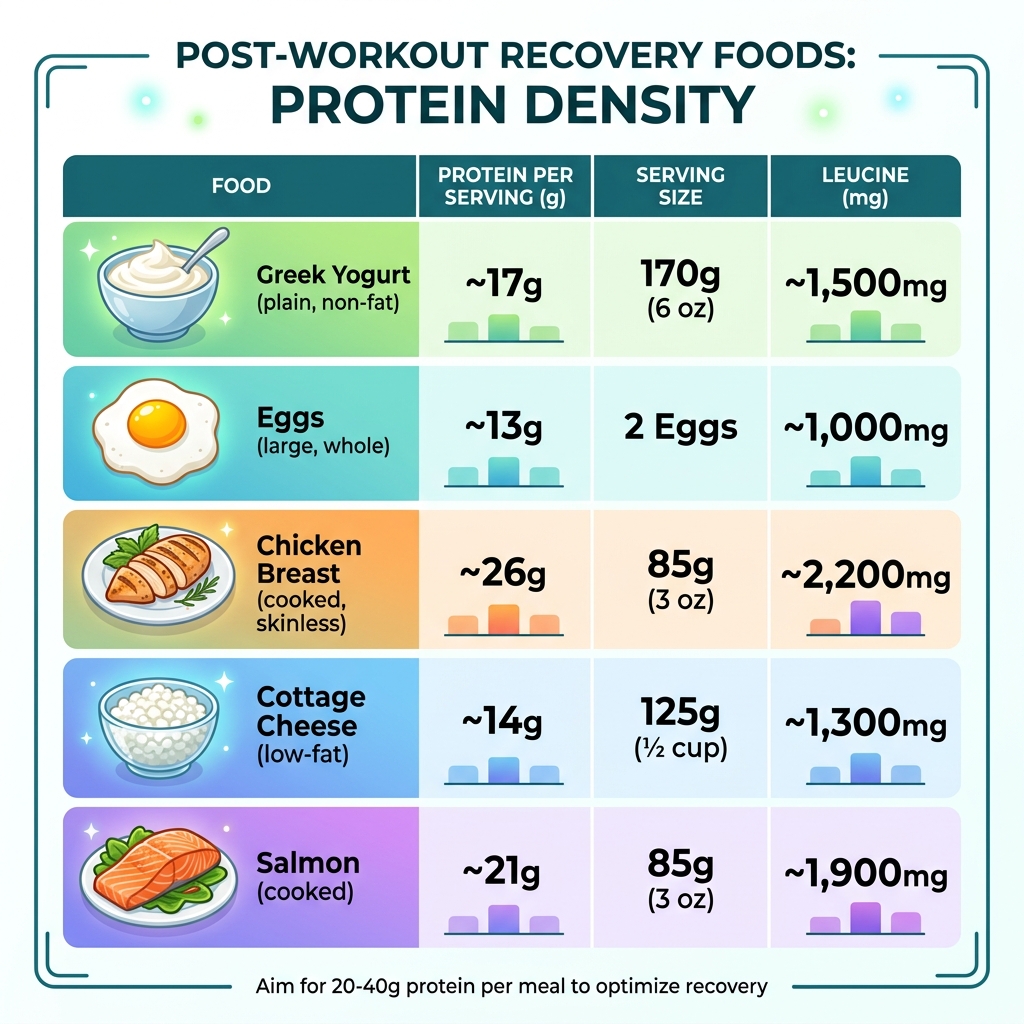
Top 10 Science-Backed Foods for Faster Healing
Choosing the best recovery food after workout doesn’t have to be a guessing game. Science has already done the heavy lifting for us. Here are ten of the most effective foods to help you bounce back.
- Greek Yogurt: This is a recovery powerhouse. Because it’s strained, it contains nearly double the protein of regular yogurt and less sugar. Pair it with berries for a perfect carb-protein mix.
- Whole Eggs: Don’t toss the yolk! A 2017 study found that whole eggs stimulate muscle protein synthesis significantly more than egg whites alone. Plus, they have the highest protein digestibility score available.
- Fatty Fish (Salmon/Mackerel): These provide high-quality protein and are loaded with omega-3 fatty acids, which help control the body’s inflammatory response.
- Tart Cherry Juice: Loaded with anthocyanins, this juice has been shown to reduce muscle pain and weakness after intense exercise.
- Chocolate Milk: It might sound like a childhood treat, but it naturally hits that 3:1 carb-to-protein ratio perfectly. It provides whey, casein, and electrolytes all in one glass.
- Bananas: Great for a quick carb boost and potassium, which helps prevent muscle cramps.
- Cottage Cheese: Rich in casein protein, making it the ideal “before bed” snack to support muscle repair while you sleep.
- Oats: A half-cup of dry oats provides 5g of plant-based protein and complex carbs for sustained energy.
- Sweet Potatoes: These are excellent complex carbohydrates that help replenish glycogen without the sugar crash.
- Pineapple: Contains bromelain, an enzyme that helps reduce muscle soreness and inflammation.
For a deeper dive into why these specific items work, you can explore more on Best Foods for Soreness and Muscle Recovery | Memorial Hermann.
Anti-Inflammatory Superstars
Beyond just macros, we need to address the “fire” in our muscles—inflammation. While some inflammation is a natural part of getting stronger, excessive soreness can sideline us.
Omega-3 fatty acids found in salmon or mackerel are incredible for this. In fact, a 4 oz serving of Atlantic mackerel provides about 3g of omega-3s, a dose shown in research reviews to significantly reduce post-exercise soreness.
Don’t forget the power of spices! Adding turmeric or ginger to your meals can further dampen inflammation. Even spinach contains a compound called ecdysterone, which some studies suggest can enhance muscle mass and strength gains. You can find more targeted advice in our guide on the Best Foods for Muscle Recovery.
Quick and Convenient Snacks
We know life gets busy. Sometimes you can’t cook a full salmon dinner thirty minutes after the gym. That’s where smart snacking comes in.
A tablespoon or two of honey on a rice cake can provide a quick 15-30 gram carb boost. Quinoa is another great option; it’s a rare plant-based “complete protein,” meaning it contains all nine essential amino acids.
If you’re constantly on the move, we’ve compiled a list of Healthy Snack Ideas for Fitness that require zero prep time but offer maximum recovery benefits.
Tailoring Recovery to Your Workout Type
Not all workouts are created equal, and neither should be your recovery meals. Your nutritional needs shift depending on whether you were lifting heavy weights or running a 10K.
Fueling for Cardio and Endurance
If you’ve just finished a long run or a cycling session, your primary goal is replenishing glycogen. Endurance athletes often need more carbohydrates than strength athletes.
A rough guideline for a post-run meal is around 250 to 450 calories, with a focus on a 4:1 carb-to-protein ratio. Interestingly, post-long run protein needs can sometimes exceed those of strength athletes, reaching up to 1.2 grams of protein per pound of bodyweight to help repair the extensive tissue stress.
For more specific runner-focused tips, check out Best Post-Run Foods for Muscle Recovery and Energy.
Nutrition for Strength and Hypertrophy
When the goal is building muscle, we prioritize protein and leucine-rich foods. We aim for at least 30 to 40 grams of protein and 30 to 45 grams of carbs.
Strength training creates more significant muscle fiber damage than light cardio, so the “repair” part of the 3 Rs is critical. We often recommend Nutrition Tips for Weight Loss for those trying to balance muscle gain with fat loss, as protein plays a double role in keeping you full while repairing tissue.
Timing, Hydration, and What to Avoid
We’ve covered what to eat, but when and how you hydrate are just as important for the best recovery food after workout strategy.
The Truth About the Anabolic Window
You might have heard of the “anabolic window”—the idea that you must eat within 30 minutes of your workout or your gains will vanish.
The truth is a bit more flexible. While some experts believe the window is as short as 30 to 60 minutes, the International Society of Sports Nutrition (ISSN) suggests that for most people, the window for muscle protein synthesis remains open for several hours.
However, delaying carbohydrates is the real risk. Waiting just two hours to eat your carbs can lead to a 50% lower rate of glycogen synthesis. So, while you don’t need to sprint to the kitchen the second you drop the dumbbells, you should aim to eat a balanced meal or snack within 60 to 120 minutes. For more on the science of this timing, read What to Eat After a Workout for Nutrition and Muscle Recovery.
Foods That Hinder Your Progress
Just as some foods speed up recovery, others act like a “stop” sign for your progress.
- Alcohol: It interferes with muscle protein synthesis and dehydrates you further.
- Fried Foods: High-fat meals can slow down digestion. While some fat is fine, heavy, greasy foods delay the delivery of carbs and protein to your muscles when they need them most.
- Added Sugars: While quick carbs are good, ultra-processed sugars can trigger excess inflammation, which is the opposite of what we want.
We share more on avoiding these pitfalls in our Tips for Improving Workout Recovery.
Frequently Asked Questions about Post-Workout Nutrition
How much protein and carbs should I eat after a workout?
A solid general rule is to aim for 20-40 grams of high-quality protein and roughly 0.5 grams of carbohydrates per pound of bodyweight. For a 150lb person, that’s about 75 grams of carbs. However, at a minimum, try to get at least 30-45 grams of carbs and 30 grams of protein to cover your bases.
Is chocolate milk actually a good recovery drink?
Yes! It’s often called a “scientifically-backed recovery superhero.” It provides the ideal 3:1 ratio of carbs to protein, contains both fast-acting whey and slow-acting casein, and provides electrolytes like potassium and sodium that you lose through sweat.
When should I consult a registered dietitian for my recovery plan?
If you have underlying health conditions (like diabetes or GI issues), if you are training for a professional athletic event, or if you find yourself constantly fatigued despite eating well, it’s time to talk to a pro. They can provide a personalized plan tailored to your specific metabolic needs.
Conclusion
At Lar Confortavel, we believe that the journey to a stronger you doesn’t end when you leave the gym—it’s just beginning. By choosing the best recovery food after workout, you are giving your body the tools it needs to “soar” instead of just staying “sore.”
Consistency is your best friend. You don’t need to be perfect every single day, but prioritizing whole foods, staying hydrated (aiming for 16–24 ounces of fluid for every pound lost), and hitting your protein targets will yield massive results over time.
Ready to take your recovery to the next level? Explore our full range of recovery strategies and start fueling your potential today!
