
The Best Protein Food for Runners: Quick Picks for Faster Recovery
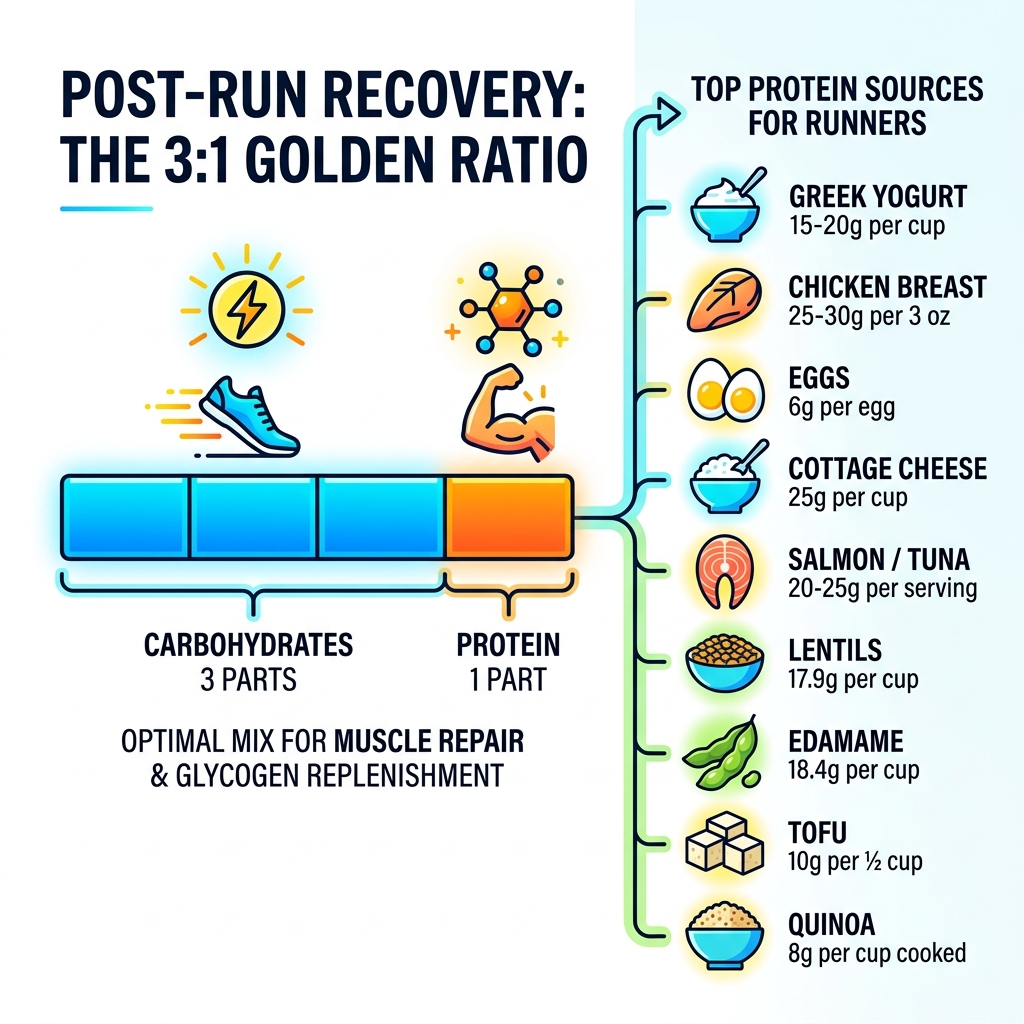
The best protein food for runners includes eggs, Greek yogurt, cottage cheese, chicken breast, fatty fish, lentils, tofu, and quinoa — all of which support muscle repair and recovery after training.
Top protein picks for runners at a glance:
| Food | Protein per Serving | Best For |
|---|---|---|
| Greek yogurt | 15-20g per cup | Post-run snack |
| Chicken breast | 25-30g per 3 oz | Main meals |
| Eggs | 6g per egg | Any time of day |
| Cottage cheese | 25g per cup | Night recovery |
| Salmon / tuna | 20-25g per serving | Omega-3s + protein |
| Lentils | 17.9g per cup | Plant-based option |
| Edamame | 18.4g per cup | Plant-based snack |
| Tofu | 10g per 1/2 cup | Versatile plant protein |
| Quinoa | 8g per cup cooked | Complete plant protein |
When runners think about nutrition, carbs usually steal the spotlight. And yes — carbs fuel your miles. But protein is just as critical, and many runners simply don’t get enough of it.
Here’s why it matters: every footstrike puts two to seven times your bodyweight of stress on your muscles and joints. That stress causes tiny tears in muscle fibers. Protein is what your body uses to repair those tears — and come back stronger.
Without enough protein, you may notice slower recovery, more frequent injuries, or runs that just don’t seem to improve no matter how hard you train.
Endurance athletes need significantly more protein than the average person. The International Association of Athletics Federations (IAAF) recommends 1.3 to 2.4 grams of protein per kilogram of body weight per day — well above the standard recommendation of 0.8g/kg for sedentary adults. For a 140-pound runner, that translates to roughly 84 to 154 grams of protein daily.
The good news? You don’t need expensive supplements or complicated meal plans to hit those numbers. The right whole foods, timed well, can do most of the heavy lifting.
Why Protein is the Best Protein Food for Runners
We often hear that “carbs are king” for endurance, but protein is the silent partner that keeps the machine running. When we run, we aren’t just burning calories; we are physically stressing our biological structures.
Repairing the Damage
Every mile you clock creates muscle microtears. This isn’t a bad thing—it’s how we get stronger. However, those tears require amino acids (the building blocks of protein) to knit back together. Beyond muscle, protein is essential for tissue repair in our ligaments and tendons, which take a beating on pavement. It also facilitates bone remodeling, ensuring our skeletal system can handle the repetitive impact of distance running.
Beyond the Muscles
Protein wears many hats in a runner’s body:
- Immune Support: Intense training can temporarily weaken the immune system for 4 to 5 hours post-exercise. Protein helps produce antibodies and white blood cells to keep us healthy.
- Satiety and Weight Management: Protein takes longer to digest than simple carbs, helping to curb “runger”—that insatiable post-run hunger. This stabilizes blood sugar and prevents the energy crashes that lead to reaching for junk food. For more on this, check out our nutrition tips for weight loss.
- Energy Utilization: While not the primary fuel source, protein can provide up to 10% of our energy during prolonged exercise, especially when glycogen stores run low.
To maximize these benefits, we should aim for protein to make up about 15% to 20% of our total daily calories. Using the best foods for muscle recovery ensures that your body has a steady stream of amino acids to handle a daily intake of 1.2-2.4g/kg.
Top Animal-Based Protein Sources for Endurance
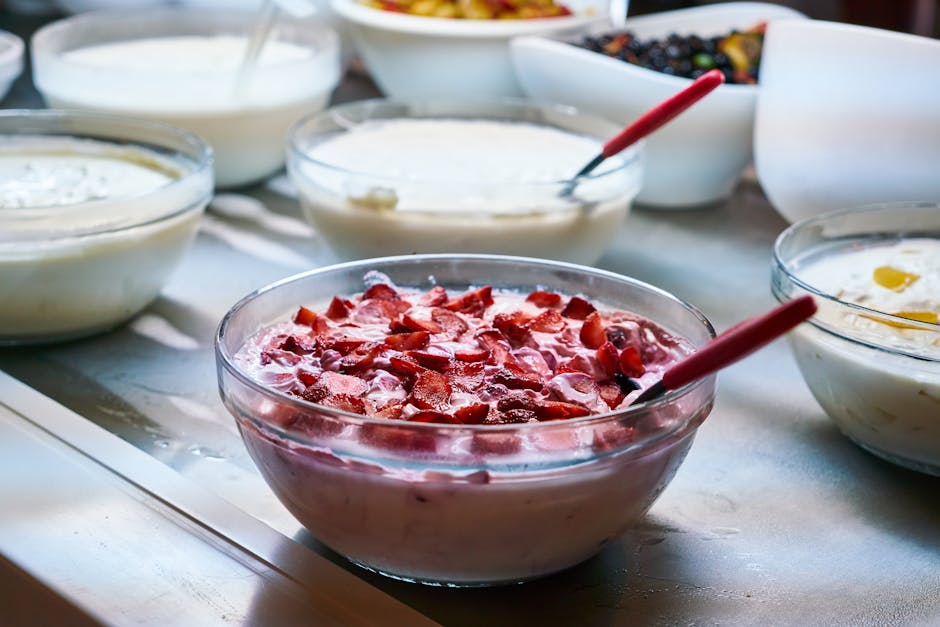
Animal-based proteins are often considered the “gold standard” for recovery because they are “complete” proteins, meaning they contain all nine essential amino acids our bodies cannot produce on their own.
The Power of Leucine and BCAAs
Specifically, animal proteins are rich in Branched-Chain Amino Acids (BCAAs), with leucine being the most important. Leucine acts as a biological “switch” that turns on muscle protein synthesis. Without enough leucine, your body struggles to repair the damage from a hard interval session.
Micronutrient Bonuses
Choosing the best protein food for runners from animal sources also provides critical vitamins and minerals:
- Iron and B12: Found in red meat and poultry, these are vital for oxygen transport in the blood.
- Omega-3s: Found in fatty fish, these reduce inflammation.
- Casein: Found in dairy, this is a slow-digesting protein that repairs muscles while you sleep.
For those looking to integrate these into a full plan, our guide on healthy meals for fitness enthusiasts offers great inspiration.
Top Animal-Based Picks: The Best Protein Food for Runners
- Eggs: The “perfect” protein. One egg provides about 6g of protein and is highly digestible. They are incredibly versatile for any meal.
- Greek Yogurt: A heavy hitter with 15-20g of protein per cup. It’s an excellent base for healthy post workout smoothies.
- Cottage Cheese: Often overlooked, it contains about 25g of protein per cup. It is rich in casein, making it a perfect pre-bed snack for overnight recovery.
- Chicken Breast: A classic for a reason. A 3-ounce serving delivers 25-30g of lean protein.
- Turkey: Similar to chicken but often leaner. It’s a great deli option for quick wraps.
- Fatty Fish (Salmon/Tuna): Provides 20-25g of protein plus anti-inflammatory fats to soothe aching joints.
- Lean Beef: Excellent for runners prone to anemia, providing high-quality iron and B12.
Aim for 20-30g per serving to hit the “sweet spot” of what the body can actually utilize in one sitting.
Essential Plant-Based Protein Sources
Can you be a high-performing runner on a plant-based diet? Absolutely. While many plant proteins are “incomplete” (missing one or more essential amino acids), you can easily solve this by eating a variety of sources throughout the day.
The Anti-Inflammatory Edge
Plant-based proteins often come packed with fiber and phytonutrients that have potent anti-inflammatory effects. For example, lentils and beans help lower systemic inflammation, which can speed up your return to the track. Incorporating protein rich foods for home training into a vegan or vegetarian diet is a smart move for long-term health.
Plant-Powered Options: The Best Protein Food for Runners
- Soy Products (Tofu/Tempeh/Edamame): Soy is one of the few complete plant proteins. Tofu offers about 10g per half cup, while tempeh is even denser at 15-20g per serving. Edamame makes a fantastic high-protein snack with 18g per cup.
- Legumes (Lentils/Beans): Lentils are a recovery powerhouse with nearly 18g of protein per cup. Beans offer about 8-10g per half cup and are great for stabilizing blood sugar.
- Quinoa: Another complete protein, quinoa provides 8g per cooked cup and serves as a much better base for meals than white rice or pasta.
- Seitan: Made from wheat gluten, it is incredibly protein-dense, often rivaling chicken breast in gram-for-gram protein content.
- Hemp Seeds and Pumpkin Seeds: These are excellent “toppers.” Pumpkin seeds, in particular, are surprisingly high in protein (about 9g per ounce).
- Nut Butters: Peanuts actually have the highest protein content of any nut (technically they are legumes!). A couple of tablespoons on toast provides about 7-8g of protein.
- Nutritional Yeast: A “cheesy” tasting flake that provides about 2g of protein per tablespoon—perfect for sprinkling on popcorn or pasta.
By combining “complementary” proteins—like rice and beans or peanut butter on whole-grain bread—you ensure your body gets the full spectrum of amino acids needed for repair.
Timing, Distribution, and Common Questions
When it comes to the best protein food for runners, when you eat is almost as important as what you eat.
The Anabolic Window and Distribution
The “anabolic window” is the period after a run when your muscles are most primed to absorb nutrients. While the “30-minute rule” is a good goal for long or intense runs, research shows the window for muscle repair actually stays open for up to 24 hours.
However, your body can only process about 15 to 30 grams of protein in one sitting. If you eat a 100g protein steak at dinner but skip protein at breakfast, you are wasting recovery potential. It is much better to distribute your intake evenly every 3-4 hours.
| Timing | Protein Goal | Purpose |
|---|---|---|
| Pre-Run | Low (5-10g) | Prevent muscle breakdown without GI distress |
| During Run | Minimal | Only needed for ultra-distances (4+ hours) |
| Post-Run | 20-30g | Optimize muscle protein synthesis and repair |
| Before Bed | 20-25g | Casein-rich foods for overnight recovery |
For more specific strategies, see our recovery tips after intense workouts.
How much protein do runners need daily?
As mentioned, the range is wide: 1.2 to 2.4g per kg of body weight.
- Casual Runners: 1.2-1.4g/kg.
- Marathon/Endurance Training: 1.5-1.8g/kg.
- Elite/Ultra Athletes or those Strength Training: Up to 2.4g/kg.
If you are a 150lb (68kg) runner in the middle of marathon prep, you should target roughly 100g to 125g of protein daily.
Should runners use protein powders?
Supplements are not a replacement for whole foods, but they are incredibly convenient.
- Whey Isolate: The fastest-absorbing protein, making it ideal for immediate post-run recovery. It is high in leucine.
- Casein: Best for before bed.
- Plant-Based Blends: Look for pea and rice protein blends to ensure a complete amino acid profile.
If you’re new to this, our guide on vitamins and supplements for beginners can help you navigate the aisles.
How to avoid digestive issues during training?
“Runner’s belly” (cramping and nausea) affects 30% to 90% of endurance athletes. To avoid this:
- Lower the Fiber: While fiber is healthy, don’t eat high-fiber beans or lentils right before a run. Save those for the recovery meal.
- Timing: Finish a full meal 2-3 hours before running.
- Whey Isolate: If you have a sensitive stomach, whey isolate is often easier to digest than whey concentrate or bulky plant proteins.
- Test and Learn: Never try a new protein source on race day! Test your snacks during your base-building phase.
Conclusion
At Lar Confortavel, we believe that your training is only as good as your recovery. By prioritizing the best protein food for runners, you aren’t just eating for health—you’re eating for performance. Whether you prefer the leucine-rich power of Greek yogurt and eggs or the anti-inflammatory benefits of lentils and tofu, the key is consistency and distribution.
Remember to pair your protein with complex carbohydrates in a 3:1 ratio after your long runs to replenish glycogen while repairing muscle. With a balanced approach to nutrition, you’ll find yourself recovering faster, feeling stronger, and ready to tackle your next personal best.
